
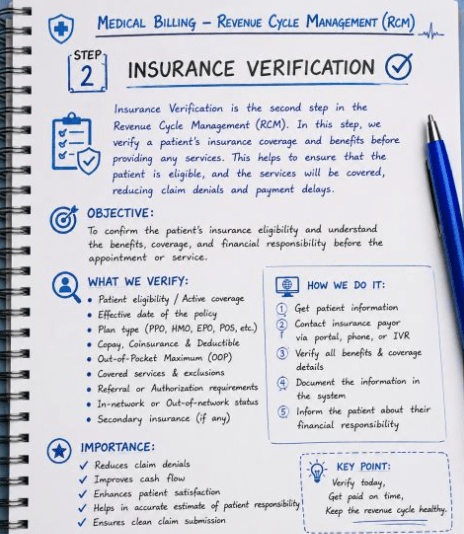
Insurance Verification is one of the most important steps in the Medical Billing Revenue Cycle Management (RCM) process. While it takes place before a patient receives treatment, it has a direct impact on whether a healthcare provider gets paid accurately and on time. A simple verification process can prevent claim denials, reduce payment delays, improve cash flow, and create a better experience for both patients and providers.
Many billing issues that occur later in the revenue cycle can be traced back to incomplete or incorrect insurance verification. That is why successful medical practices make insurance verification a priority before every patient visit.
What Is Insurance Verification?
Insurance Verification is the process of confirming a patient's health insurance information before medical services are provided. The goal is to ensure that the patient's insurance policy is active and to verify what services are covered under the plan.
During this process, the billing team reviews important information such as insurance eligibility, benefits, copayment, deductible, coinsurance, prior authorization requirements, and whether the provider is in-network with the patient's insurance plan. Having this information before the appointment helps both the practice and the patient avoid unexpected billing issues.
What Information Is Verified?
A complete insurance verification includes confirming several important details, including:
- Active insurance coverage
- Patient eligibility
- Effective and termination dates
- Primary and secondary insurance
- Copayment amount
- Deductible balance
- Coinsurance responsibility
- Out-of-pocket maximum
- Covered and non-covered services
- Prior authorization requirements
- Referral requirements
- Provider network participation
- Policy limitations and exclusions
Verifying these details helps ensure that claims are submitted correctly the first time.
Why Is Insurance Verification Important?
Insurance Verification is much more than checking whether a patient has insurance. It is one of the most effective ways to reduce billing errors and improve the financial performance of a healthcare practice.
Accurate insurance verification helps:
- Reduce claim denials and rejections
- Prevent payment delays
- Improve clean claim submission
- Increase first-pass claim acceptance rates
- Improve cash flow
- Reduce administrative work caused by denied claims
- Help patients understand their financial responsibility before treatment
- Create a smoother patient experience
By identifying potential problems before services are provided, practices can save significant time and resources later in the billing process.
Common Issues That Insurance Verification Can Prevent
Many avoidable billing problems occur because insurance information was never verified or was verified incorrectly. These issues may include inactive insurance coverage, incorrect payer information, services that require prior authorization, non-covered procedures, missing referrals, incorrect patient demographics, and unexpected patient balances.
Resolving these issues before the patient's appointment is much easier than correcting them after a claim has already been denied.
Insurance Verification and Clean Claim Submission
One of the main goals of Revenue Cycle Management is to submit clean claims that can be processed without delays or corrections. Insurance Verification plays a major role in achieving this goal.
When eligibility is confirmed, benefits are verified, and prior authorizations are obtained before treatment, the chances of submitting an accurate claim increase significantly. Clean claims are processed faster, resulting in quicker reimbursements and fewer denials.
Best Practices for Insurance Verification
If you would like to learn more about our Medical Billing and Revenue Cycle Management services, contact us today.
Healthcare organizations can improve their billing performance by following a few simple best practices. Insurance should be verified before every patient visit, even for established patients, since coverage and benefits can change at any time. Practices should confirm whether prior authorization or referrals are required, verify patient demographic information, document all verification details in the patient's record, and inform patients about their expected copayment, deductible, or coinsurance before services are provided.
Following these steps helps improve efficiency throughout the Revenue Cycle Management process while reducing unnecessary billing complications.
The Bottom Line
Insurance Verification may seem like a routine administrative task, but it is one of the foundations of successful Medical Billing and Revenue Cycle Management. A few minutes spent verifying insurance before an appointment can prevent costly claim denials, reduce payment delays, improve reimbursement rates, and strengthen the overall financial health of a healthcare practice.
For healthcare providers looking to improve their revenue cycle, Insurance Verification is not just another step—it is one of the smartest investments they can make in an efficient and compliant billing process.
How PayDoc Medical Solutions Can Help
At PayDoc Medical Solutions, we provide complete Medical Billing and Revenue Cycle Management (RCM) services to healthcare providers across the United States. Our experienced team performs accurate insurance verification, patient eligibility checks, prior authorization, claim submission, payment posting, accounts receivable management, denial management, credentialing, and many other RCM services designed to help practices maximize revenue while reducing billing errors.
Frequently Asked Questions (FAQs)
1. What is insurance verification in medical billing?
Insurance verification is the process of confirming a patient's health insurance coverage before medical services are provided. It includes checking eligibility, benefits, copay, deductible, coinsurance, prior authorization requirements, and covered services to ensure accurate claim submission.
2. Why is insurance verification important?
Insurance verification helps prevent claim denials, reduce payment delays, improve clean claim submission, and ensure that both the healthcare provider and the patient understand the insurance coverage and financial responsibility before treatment.
3. When should insurance verification be performed?
Insurance verification should be completed before every patient visit, even for returning patients. Insurance plans and benefits can change at any time, so verifying coverage before each appointment helps avoid billing issues.
4. What information is checked during insurance verification?
The verification process typically includes checking active insurance coverage, patient eligibility, copayment, deductible, coinsurance, out-of-pocket maximum, prior authorization requirements, referral requirements, covered services, and provider network participation.
5. Can insurance verification reduce claim denials?
Yes. Insurance verification is one of the most effective ways to reduce claim denials. By confirming coverage and identifying issues before treatment, healthcare providers can submit cleaner claims and avoid many common billing errors.
6. What happens if insurance verification is not completed?
If insurance verification is skipped, the practice may face claim denials, payment delays, incorrect billing, unexpected patient balances, and additional administrative work to correct and resubmit claims.
7. Is insurance verification the same as prior authorization?
No. Insurance verification confirms that a patient's insurance is active and identifies their benefits and coverage. Prior authorization is a separate process in which approval must be obtained from the insurance company before certain medical services or procedures are performed.
8. Who is responsible for insurance verification?
Insurance verification is usually performed by the front desk staff, patient access team, insurance verification specialists, or medical billing professionals before the patient's appointment.
9. How does insurance verification improve Revenue Cycle Management (RCM)?
Insurance verification improves Revenue Cycle Management by reducing claim errors, increasing first-pass claim acceptance, improving reimbursement timelines, minimizing denials, and helping healthcare practices maintain a healthier cash flow.
10. Can PayDoc Medical Solutions handle insurance verification for my practice?
Yes. PayDoc Medical Solutions provides professional insurance verification services as part of our complete Medical Billing and Revenue Cycle Management (RCM) solutions. Our team helps healthcare providers verify patient eligibility, confirm benefits, obtain prior authorizations when needed, reduce claim denials, and improve reimbursement accuracy.
